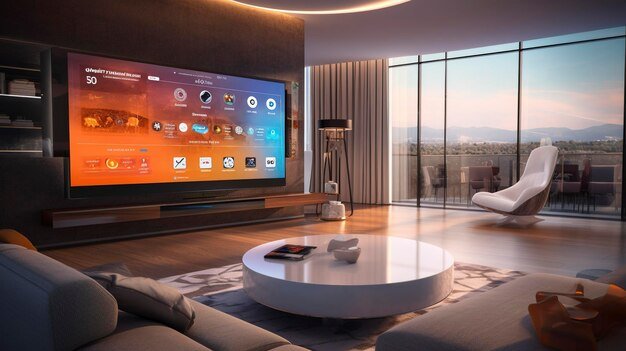
Imagine walking into your living room, saying a simple phrase, and watching your space transform into the ultimate entertainment haven. Lights dim to a cinematic glow, the projector whirs to life, surround sound envelops you, and your favorite movie begins – all without touching a single remote. This isn't science fiction; it's the reality of Smart Home Integration for Entertainment, and it’s revolutionizing how we experience leisure at home. It’s about more than just convenience; it’s about creating an immersive, personalized, and effortless environment where every movie night, gaming session, or music listening experience is elevated to an art form.
At a Glance: Your Pathway to Smart Entertainment
- Seamless Control: Manage all your entertainment devices—TVs, speakers, lights, streaming—from one central app, voice assistant, or smart remote.
- Personalized Ambiance: Create custom "scenes" or profiles that instantly set the mood for movies, parties, gaming, or relaxation.
- Hands-Free Operation: Use simple voice commands to control every aspect of your entertainment setup.
- Immersive Experiences: Synchronize smart lighting and audio with your content for dynamic, engaging environments.
- Energy Efficiency: Automate power settings and device usage to save on utility bills.
- Future-Proof Fun: Benefit from cutting-edge trends like AI personalization, 8K visuals, and spatial audio.
- Simplified Setup: A step-by-step approach makes integrating smart entertainment accessible for everyone.
Beyond the Remote: What "Smart Home Integration for Entertainment" Really Means
At its core, smart home integration for entertainment is about creating a unified, interconnected ecosystem of devices that work together to enhance your leisure activities. Forget the days of juggling five different remotes or navigating complex menus just to start a movie. Instead, think of a symphony where smart TVs, speakers, lighting systems, and streaming devices communicate seamlessly, orchestrated by a central hub, a smartphone app, or even your voice.
This isn't just about turning devices on and off; it's about intelligent automation. It's the system learning your preferences, anticipating your needs, and executing multiple commands simultaneously to craft the perfect atmosphere. From adjusting the thermostat to the ideal movie-watching temperature to cueing up your favorite playlist across multiple rooms, this integration simplifies and elevates every interaction with your home entertainment.
The Unrivaled Benefits: Why Go Smart for Your Entertainment?
Stepping into the world of smart entertainment isn't merely an upgrade; it's a transformation of your home living experience. The advantages extend far beyond simple convenience, touching upon personalization, efficiency, and even unexpected security benefits.
Centralized Command at Your Fingertips
Imagine a single interface – perhaps your smartphone app, a dedicated smart display, or even your voice – from which you can manage every entertainment device in your home. No more searching for lost remotes or fumbling with multiple controllers. With a smart setup, one tap or one spoken phrase can initiate a complex sequence of actions, streamlining your entertainment choices and reducing clutter. It’s about simplifying control so you can focus on enjoying the content.
Personalized Experiences for Every Mood (and Person!)
Smart integration shines in its ability to tailor experiences. You can create custom profiles for different family members, each with their preferred streaming services, music playlists, and lighting preferences. Want a vibrant, energetic atmosphere for a party? Or a soft, warm glow for a quiet evening of reading? Design "scenes" like "Movie Night," "Gaming Zone," or "Chill Vibes" that, with a single command, instantly adjust lighting, soundscapes, and even device power settings to match the occasion. This level of personalization makes your home truly yours.
Hands-Free Magic: The Power of Your Voice
Voice assistants like Amazon Alexa, Google Assistant, and Apple Siri have become the conductors of the smart home orchestra. "Alexa, start movie night." "Hey Google, play my chill playlist in the living room." "Siri, dim the lights to 30%." These simple commands can trigger a cascade of actions, transforming your space without you ever needing to lift a finger. This hands-free control offers unparalleled ease, making interactions feel natural and intuitive. For a deeper dive into mastering your voice assistant, explore our detailed guide.
Immerse Yourself: Lighting, Sound, and Picture in Harmony
This is where smart entertainment truly shines. Integrating smart lighting allows you to dim the lights gradually as a movie starts, or even synchronize dynamic lighting effects with the action on screen for a truly immersive experience. Pair this with multi-room audio, letting you play the same music throughout your home for a party, or different podcasts in individual rooms. High-fidelity smart speakers deliver crisp, spatial audio, completing an environment where sights and sounds blend perfectly to draw you into the content.
Smart Savings & Security (Bonus Perks)
While focused on entertainment, smart home integration brings unexpected benefits. By automating power settings, such as turning off devices when not in use or dimming lights during the day, you can significantly improve energy efficiency and reduce utility bills. Furthermore, integrating smart entertainment with a broader smart home security system allows for remote monitoring, real-time alerts, and features like motion-sensor lights that can simulate occupancy, adding a layer of peace of mind even when you're away. For tips on fortifying your home's digital defenses, check out our expert advice.
Pioneering the Future: Top Trends & Emerging Innovations
The smart home entertainment landscape is dynamic, constantly evolving with exciting new technologies that push the boundaries of what's possible. Staying abreast of these trends ensures your system remains cutting-edge and future-proof.
AI-Powered Personalization & Predictive Fun
Artificial intelligence is increasingly at the heart of smart entertainment. AI algorithms learn your viewing habits, music preferences, and even your mood patterns, offering tailored content recommendations and proactively setting up ideal environments. Imagine your system suggesting a calming playlist after a long day or automatically queuing up a new series based on your past favorites. This predictive personalization makes your entertainment experience feel uncannily intuitive.
Visual & Auditory Masterpieces: 8K, Spatial Audio, and Beyond
The quest for ultimate realism drives innovation in display and sound technology. 8K TVs are becoming more accessible, offering unparalleled visual clarity and depth that makes you feel like you're looking through a window, not at a screen. Complementing this, spatial audio technologies like Dolby Atmos and DTS:X create three-dimensional soundscapes, where individual sounds seem to emanate from specific points around you, above you, and even behind you, utterly transforming movie and gaming immersion.
Stepping into the Experience: AR/VR for Gaming & Education
Augmented Reality (AR) and Virtual Reality (VR) are no longer just niche interests; they're becoming integral to interactive entertainment and education. Imagine playing a game where your physical room becomes part of the digital world, or attending a virtual concert where you feel like you're truly there. As these technologies mature, their integration into smart home entertainment will offer unprecedented levels of engagement, blurring the lines between the digital and physical.
The Automated Playground: From Home Theaters to Outdoor Oases
Emerging applications are expanding the canvas of smart entertainment beyond the living room. Fully automated home theaters with retractable screens, cinema-quality projectors, and sophisticated lighting control are becoming standard for luxury setups. Smart gaming rooms now dynamically adjust lighting colors and intensity, and even temperature, to match game intensity, creating a truly responsive environment. And the fun doesn't stop indoors: weatherproof smart speakers and projectors are bringing high-quality entertainment to outdoor patios and gardens, creating integrated entertainment zones for al fresco enjoyment.
Your Entertainment Ecosystem: Essential Smart Devices to Consider
Building a robust smart entertainment system means thoughtfully selecting devices that integrate seamlessly. Here’s a breakdown of the key players you'll want to consider for your connected home.
The Brains: Smart Hubs & Voice Assistants
Every smart home needs a central command center. These hubs act as the translators, allowing devices from different manufacturers to communicate. Often, a voice assistant is built into these hubs, providing the primary interface for hands-free control.
- Amazon Echo (Alexa): Known for its vast ecosystem and extensive device compatibility, Alexa is a popular choice for voice control, offering a wide range of skills for entertainment and smart home management.
- Google Nest (Google Assistant): Seamlessly integrates with Google services and a broad array of devices. Google Assistant excels at contextual commands and can be particularly helpful for search-related queries.
- Apple HomePod (Siri/HomeKit): Ideal for Apple users, HomeKit emphasizes privacy and a streamlined user interface. Control is effortless through Siri on your iPhone, iPad, or HomePod.
- Samsung SmartThings: A highly versatile platform that supports a multitude of devices and brands, allowing for a truly centralized system with powerful automation capabilities via its intuitive app.
The Sights & Sounds: Smart TVs, Speakers, and Streaming Devices
These are the core components of your entertainment experience.
- Smart TVs: Modern smart TVs from brands like Samsung, LG, Sony, and Vizio often come with built-in voice assistants (or are compatible with external ones) and support popular streaming apps directly. They can be the central display for your integrated system.
- Smart Speakers: Devices like Sonos, Bose, Amazon Echo, and Google Nest speakers offer high-quality audio and multi-room capabilities. They can be controlled via voice or app, perfect for creating whole-home audio experiences. For help selecting the perfect smart speakers, refer to our guide.
- Streaming Devices: Apple TV, Roku, Amazon Fire TV, and Google Chromecast bring all your favorite streaming services (Netflix, Disney+, Hulu, etc.) into one accessible interface, often with voice control integration.
Setting the Scene: Smart Lighting Systems
Lighting dramatically impacts mood and immersion.
- Philips Hue, Lutron Caséta, LIFX: These systems offer unparalleled control over color, brightness, and scheduling. You can dim lights for movie scenes, change colors for parties, or even synchronize them with music or on-screen content. Smart lights also offer energy savings and enhanced security by simulating occupancy when you're away. To delve into the world of smart lighting, check out our comprehensive article.
Comfort & Control: Smart Thermostats
While not directly entertainment devices, smart thermostats enhance your comfort during long viewing sessions.
- Nest Learning Thermostat, Ecobee: These devices learn your preferences and adjust temperature remotely, ensuring your home is always at the perfect climate for relaxation or active gaming, contributing to both comfort and energy efficiency.
Unexpected Allies: Smart Appliances & Security Systems
While often overlooked for entertainment, these devices can play supporting roles in your smart home ecosystem. Smart coffee makers can brew your favorite beverage before a morning show, and smart security cameras can let you keep an eye on the kids while you enjoy a movie in another room. The interconnectedness of a smart home offers layers of convenience and peace of mind.
Building Your Smart Entertainment Hub: Platforms, Protocols, and Picking Your Path
Embarking on smart home integration can feel daunting with so many options. The key is understanding how devices communicate and choosing a path that aligns with your needs and existing technology.
The Command Centers: Key Smart Home Platforms
Think of these platforms as the operating systems for your smart home. They dictate which devices can communicate and how you control them.
- Amazon Alexa: Extremely popular and widely compatible. If you already use an Echo device, expanding with Alexa-compatible entertainment is a natural choice. It excels with voice commands for a vast array of functions.
- Google Assistant: Integrated into Google Nest devices, Android phones, and many third-party speakers. Google's strength lies in its AI capabilities, natural language processing, and seamless integration with other Google services.
- Apple HomeKit: Best suited for those deeply embedded in the Apple ecosystem. HomeKit prioritizes privacy and offers a clean, intuitive interface through the Home app on iOS/macOS and Siri voice commands. Devices labeled "Works with Apple HomeKit" guarantee a smooth experience.
- Samsung SmartThings: A highly flexible and powerful platform that supports devices from numerous brands (not just Samsung). If you want maximum compatibility and the ability to create complex automations, SmartThings is an excellent choice.
The Silent Connectors: Understanding Zigbee & Z-Wave
Beneath the user-friendly apps and voice commands, wireless communication protocols like Zigbee and Z-Wave are silently ensuring your devices can talk to each other.
- Zigbee: A low-power, short-range wireless standard ideal for battery-operated sensors and lights. Many smart bulbs and switches use Zigbee, creating a mesh network where devices relay signals to each other, extending the range.
- Z-Wave: Another mesh networking protocol, Z-Wave generally has a longer range and better wall penetration than Wi-Fi, making it suitable for larger homes. It's often found in smart locks, thermostats, and other critical home automation devices. Many smart hubs (like SmartThings and some Echo models) include built-in Zigbee or Z-Wave radios, allowing them to communicate directly with these devices without needing extra bridges.
Understanding these protocols helps when you're looking for compatibility, especially if you want to mix and match devices from different manufacturers.
Making the Smart Choice: What to Look For
When selecting your smart entertainment solution, keep these crucial factors in mind:
- Compatibility with Existing Ecosystems: Do you already have an Alexa speaker or an Apple TV? Building on what you own can simplify setup and ensure smooth integration.
- Ease of Use: How intuitive is the app? How natural are the voice commands? A system that’s hard to use quickly loses its appeal.
- Scalability for Future Expansion: Will your chosen platform support additional devices as your smart home grows? Look for open systems with broad compatibility.
- Budget: Smart home setups can range from a few hundred dollars for a basic starter kit to thousands for a fully custom, high-end system. Define your budget early.
- Reliable Customer Support & Software Updates: Technology evolves. Good support and regular software updates ensure your system remains secure, functional, and up-to-date with new features.
Your Step-by-Step Guide to Setting Up a Smart Entertainment System
Ready to dive in? Here’s a practical roadmap to get your smart entertainment system up and running, transforming your living space into a truly intelligent hub of fun.
- Assess Your Needs and Vision: Before buying anything, think about what you want to achieve. What are your biggest entertainment pain points? Do you want to simplify movie nights, create dynamic gaming environments, or have multi-room audio for parties? List your desired features, focusing on the entertainment experiences you crave most.
- Research and Choose Compatible Devices: Based on your needs, research devices that work well together. If you've chosen a primary platform (Alexa, Google Home, HomeKit, SmartThings), ensure new devices are compatible with it. Read reviews, compare features, and look for certifications like "Works with Alexa" or "HomeKit Certified."
- Set Up a Central Hub (If Needed): Many smart home systems benefit from a central controller. This could be an Amazon Echo, Google Nest Hub, Apple HomePod Mini, or a SmartThings Hub. This device acts as the brain, connecting all your smart devices and allowing them to communicate and be controlled from a single point. Follow the manufacturer's instructions for initial setup and network connection.
- Install and Connect Your Entertainment Devices:
- Smart TV/Streaming Device: Connect to your Wi-Fi network and install any necessary apps. Enable voice control features if available.
- Smart Speakers: Place them strategically for optimal sound. Connect them to your Wi-Fi and link them to your chosen smart home platform.
- Smart Lighting: Replace existing bulbs or switches with smart ones. Connect them to their respective bridge (e.g., Philips Hue Bridge) and then link the bridge to your central smart home hub.
- Smart Thermostat: Install according to manufacturer guidelines, then connect it to your Wi-Fi and smart home platform.
- Customize Settings and Create Entertainment Scenes: This is where the magic happens.
- Device Grouping: Group lights, speakers, and other devices by room or function.
- Routine/Scene Creation: Use your smart home app to create custom routines or "scenes." For example, a "Movie Night" scene could:
- Dim living room lights to 20% warm white.
- Turn on the TV and switch to the HDMI input for your streaming device.
- Turn on the soundbar/surround sound.
- Adjust the thermostat to 72°F (22°C).
- Start Netflix.
- Voice Command Setup: Assign simple, memorable voice commands to trigger these scenes.
- Test and Optimize: Once everything is set up, test each device and scene to ensure it functions as intended. Are the lights dimming correctly? Is the music playing in all desired rooms? Don't be afraid to tweak settings, adjust timing, or refine your voice commands for a truly seamless experience.
Navigating the Roadblocks: Common Challenges & Simple Solutions
While smart home integration promises effortless entertainment, you might encounter a few bumps along the way. Knowing common pitfalls and their solutions can save you frustration.
The Compatibility Conundrum
Challenge: Devices from different brands sometimes struggle to communicate, leading to a fragmented experience.
Solution: Prioritize devices that explicitly state compatibility with your chosen primary platform (e.g., "Works with Google Assistant," "HomeKit Certified"). Consider investing in devices that support common protocols like Zigbee or Z-Wave if your hub has a built-in radio for them. Sticking mostly to one ecosystem (e.g., all Philips Hue lighting if you start with Hue) can also simplify things initially.
Wi-Fi Woes & Connectivity Hiccups
Challenge: A weak or overloaded Wi-Fi network can cause devices to disconnect, commands to lag, or streams to buffer.
Solution: Invest in a robust Wi-Fi network, especially a mesh Wi-Fi system if you have a larger home. Mesh systems eliminate dead zones and provide consistent coverage, which is crucial for numerous smart devices. Ensure your router is centrally located and not hidden behind obstacles that could block the signal. Upgrading to a robust mesh Wi-Fi network can make a huge difference.
The Learning Curve & Getting Started
Challenge: The initial setup and customization of complex routines can feel overwhelming for newcomers.
Solution: Start small. Don't try to automate your entire home at once. Begin with a single room or a simple scene (like dimming lights for a movie). Utilize the wealth of online tutorials, user manuals, and community forums for your specific devices. Most smart home apps also offer helpful guides and step-by-step instructions. Don't hesitate to contact customer support if you get stuck.
Smart Entertainment: The Dos and Don'ts for a Smooth Experience
To truly unlock the magic of smart home entertainment, a little forethought goes a long way.
Do's:
- Do Choose Compatible Devices: Always verify that devices you purchase work with your chosen smart home platform (e.g., Alexa, Google Home, HomeKit, SmartThings).
- Do Invest in Robust Wi-Fi: A strong, reliable Wi-Fi network (preferably a mesh system for larger homes) is the backbone of any good smart home.
- Do Regularly Update Software: Keep your devices and hub software up-to-date to ensure security, access new features, and maintain optimal performance.
- Do Customize Settings: Dive into the app and create personalized routines, scenes, and groups. This is where your smart home truly becomes yours.
- Do Plan Your Setup: Before buying, sketch out what you want to achieve in each room. A clear vision prevents impulse buys and compatibility headaches.
Don'ts:
- Don't Mix Incompatible Devices: Avoid buying devices that don't support your chosen ecosystem or common protocols, as they'll likely lead to frustration.
- Don't Overlook Connectivity: Don't assume your current Wi-Fi will be sufficient. Poor connectivity will undermine your entire smart home experience.
- Don't Ignore Updates: Neglecting software updates can leave your system vulnerable to security risks and miss out on performance improvements.
- Don't Stick to Default Settings: The real power of smart home entertainment lies in customization. Take the time to make it work for you.
- Don't Buy Devices Without a Clear Plan: Impulse purchases can lead to redundant devices, compatibility issues, and a disjointed system.
Real-World Magic: Examples of Smart Entertainment in Action
Let's bring these concepts to life with a few scenarios demonstrating the incredible potential of smart home integration for entertainment.
The Ultimate Home Theater Experience
Imagine: You settle onto the couch after a long day. You say, "Alexa, movie night." Instantly, your 4K projector lowers from the ceiling, the motorized screen descends, the smart lights dim to a deep, cinematic blue, and your surround sound system comes alive with the theme music of your chosen streaming service. The smart thermostat nudges the temperature down a degree or two, and your favorite movie begins playing on cue. You're completely immersed, all from one simple voice command. This is the epitome of smart home entertainment, and you can delve further into Explore our Film Hub for more cinematic ideas.
Symphony Across Rooms: Multi-Room Audio
Hosting a party? A simple command like "Hey Google, play party playlist everywhere" fills your entire house with your chosen music, perfectly synchronized across smart speakers in the living room, kitchen, and even the patio. Alternatively, if one person wants to listen to a podcast in the kitchen while another enjoys classical music in the study, a multi-room audio system easily accommodates different tastes simultaneously. Control volume for individual rooms or the entire house, all from your phone or voice.
Level Up Your Gaming: The Smart Gaming Zone
Your gaming room transforms at the utterance of "Siri, gaming mode." The smart lighting shifts to a vibrant, immersive color that matches the game's aesthetic, while LED strips behind your monitor pulsate with in-game actions. The smart thermostat automatically lowers the temperature to combat the heat generated by your gaming rig and intense action. Your high-performance smart speakers or headset connect seamlessly, providing crystal-clear spatial audio that enhances every in-game sound cue, giving you a competitive edge and deeper immersion.
Investing in Enjoyment: Costs, Security & Personalization
As you embark on your smart home entertainment journey, it’s natural to consider the practicalities: how much will it cost, how secure is it, and how much can you truly make it your own?
What to Expect: The Cost of Smart Entertainment
The cost of smart home integration for entertainment can vary widely. A basic setup—a smart speaker, a few smart bulbs, and a smart plug for your TV—might cost a few hundred dollars. As you scale up to dedicated home theater projectors, multiple high-end smart speakers, sophisticated lighting systems, and professional installation, costs can quickly climb into the thousands. It's an investment that pays off in convenience, enjoyment, and often, energy savings.
Guarding Your Gateway: Security Best Practices
Security is paramount in any connected home. Smart devices, like any internet-connected gadget, can be vulnerable if not properly secured.
- Strong Passwords: Use unique, complex passwords for all your smart home accounts and Wi-Fi network.
- Two-Factor Authentication (2FA): Enable 2FA wherever possible. This adds an extra layer of security, requiring a code from your phone in addition to your password.
- Regular Software Updates: Always install firmware and software updates promptly. These often include critical security patches.
- Secure Your Wi-Fi: Use WPA3 encryption if your router supports it, and consider separating your smart devices onto a guest network or a dedicated IoT network.
- Privacy Settings: Review and adjust the privacy settings on your smart devices and voice assistants.
Making it Truly Yours: Unlocking Customization
The beauty of smart home integration is its boundless customization. Almost every aspect can be tailored to your preferences:
- Scenes and Routines: Create specific "scenes" for different activities (e.g., "Reading Time," "Dinner Party") that adjust multiple devices simultaneously.
- Automations: Set schedules for lights to turn on/off, or create conditional automations (e.g., "If I arrive home after dark, turn on living room lights").
- Voice Command Phrases: Personalize the voice commands that trigger your routines.
- Device Settings: Fine-tune brightness, color, volume, and temperature to your exact liking.
This extensive customization ensures your smart entertainment system perfectly complements your lifestyle and preferences, making every moment at home more enjoyable.
The Green Dividend: How Smart Entertainment Saves Energy
Beyond the "wow" factor, smart home entertainment offers tangible benefits in energy efficiency. By automating your devices, you can significantly reduce wasted power:
- Automated Power-Off: Schedule TVs, sound systems, and streaming devices to turn off when not in use or after a certain time.
- Smart Lighting Optimization: Dimming lights uses less energy, and motion sensors can ensure lights are only on when a room is occupied.
- Thermostat Scheduling: Smart thermostats learn your habits and optimize heating/cooling to align with your entertainment schedules, preventing energy waste when you're not actively using a room for entertainment.
- "Away" Modes: Integrate your entertainment system with an "away" mode that powers down non-essential devices when your home is empty.
These features not only enhance convenience but also contribute to a greener, more cost-effective household.
Ready for the Encore? Your Next Steps Towards a Smarter Home
You’ve explored the ins and outs of smart home integration for entertainment, from the core benefits and cutting-edge trends to practical setup advice and essential devices. Now, it’s time to take the leap.
Start small, perhaps with a smart speaker and a few smart bulbs, and gradually expand your system as you become more comfortable. Focus on the entertainment moments you want to enhance most – whether it’s making movie nights effortless, creating dynamic gaming environments, or filling your home with music. Remember to prioritize compatibility, plan your setup, and always keep an eye on security.
The future of home entertainment isn't just about better screens or louder speakers; it's about a seamlessly integrated experience that anticipates your needs and elevates every moment. By embracing smart home integration, you're not just buying gadgets; you're investing in a more convenient, personalized, and enjoyable way to live. Your next-level home enjoyment awaits.