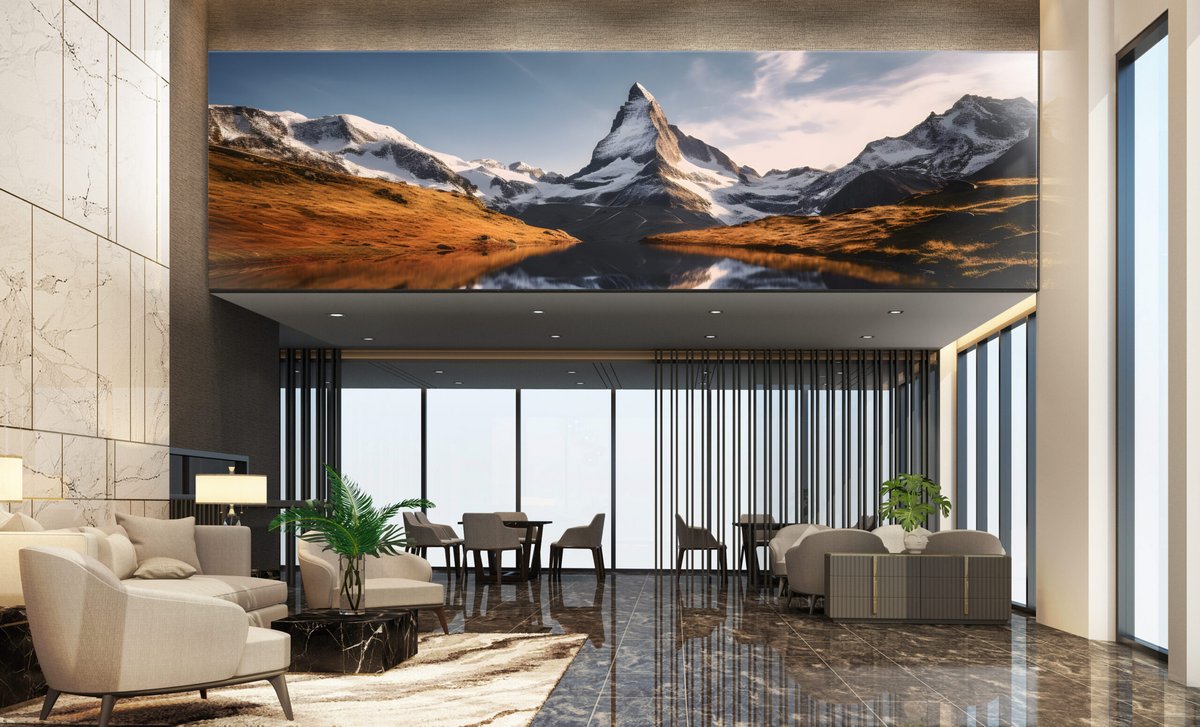
The days of squinting at dim, washed-out projections in a dedicated dark room are officially over. Step into the light, literally, because Next-Gen Projectors & Displays are rewriting the rules, delivering visuals so bright, sharp, and vibrant they challenge — and often surpass — what many expect from traditional screens. These aren't just incremental upgrades; we're talking about fundamental shifts in technology that make truly immersive, cinema-quality experiences accessible in your living room, boardroom, or even under stadium lights.
For years, projectors were niche players, relegated to home theaters or presentations where ambient light was easily controlled. Now, a wave of innovation is pushing them into the mainstream, transforming everything from how we game to how we collaborate.
At a Glance: What Next-Gen Projectors & Displays Bring to the Table
- Unprecedented Brightness: New DLP chips and laser light sources mean vivid images even in well-lit rooms.
- Stunning Clarity: True 4K resolution is becoming standard, revealing incredible detail.
- Rich Colors & Contrast: Enhanced HDR support delivers eye-popping dynamic range.
- Versatile Placement: Short-throw and ultra-short-throw models project huge images from inches away.
- Gaming Dominance: Low input lag and high refresh rates make them ideal for competitive play.
- Eco-Friendly: Laser light sources offer longer lifespans and lower power consumption than traditional lamps.
- More Affordable: Many advancements are trickling down to mid-range models, offering incredible value.
The Brightness Revolution: Why Projectors Are Suddenly So Much Better
You might think "brighter projector" simply means cramming a more powerful light bulb inside. While light sources have indeed improved, the real game-changer in the world of next-gen DLP projectors comes from an entirely new piece of engineering: Texas Instruments' (TI) SST DMD (Digital Micromirror Device) platform. This isn't just a tweak; it's a foundational redesign that fundamentally changes how projectors handle light.
Peeking Inside: How the SST DMD Works Its Magic
Projectors using DLP technology rely on a tiny chip, the DMD, which is covered in millions of microscopic mirrors. Each mirror corresponds to a single pixel and can tilt thousands of times per second to reflect light (or not reflect it) towards the lens. This rapid tilting creates the image you see.
The SST (Single Side Tilt) DMD platform represents a significant evolution in this mirror architecture. Imagine these tiny mirrors not just flipping faster, but doing so with greater precision and efficiency. Previous designs might have wasted a percentage of light as the mirrors transitioned, or struggled to maintain stability at higher light levels. SST changes how these mirrors are designed and how they interact with the DMD controller, allowing for:
- More Efficient Light Handling: Less light is wasted within the optical system. This means that for the same amount of light generated by the laser or lamp, more of it actually reaches your screen.
- Faster Mirror Switching: The mirrors can tilt and reset much more quickly, which is crucial for dynamic images, especially in high-speed content like gaming or fast-action movies.
- Enhanced Stability: The system remains more stable even when processing higher levels of light, contributing to a consistent, crisp image.
The upshot? You get significantly higher "usable" brightness, improved contrast, and better responsiveness without necessarily needing a larger, hotter, or more power-hungry light source. It's about working smarter, not just harder.
What "Usable Brightness" Truly Means for You
This newfound efficiency isn't just a number on a spec sheet. It translates directly into a better viewing experience in your actual living space. You'll notice:
- Impactful HDR Highlights: High Dynamic Range (HDR) content shines, with bright whites that pop and deep shadows that retain detail. Projectors can now deliver the startling contrast and vividness once reserved for high-end TVs.
- Battle Ambient Light: No longer are projectors strictly for pitch-black rooms. Next-gen models can hold their own against some ambient light, making them viable for daytime sports viewing or even casual TV watching in a brighter environment.
- Larger, More Immersive Screens: Projecting on a 120-inch, 150-inch, or even larger screen used to demand compromises in brightness or picture quality. With SST DMD, these massive, truly immersive canvases can maintain stunning vibrancy and clarity.
- More Affordable Performance: The best part? These brightness gains are appearing in a wider range of projectors, including many mid-range options, making premium performance more accessible than ever before.
Beyond Brightness: Other Performance Boosts from SST DMD
The SST DMD isn't a one-trick pony. Its foundational improvements ripple across other critical performance metrics:
- Superior Contrast: Beyond sheer brightness, the ability to control light more precisely enhances both baseline contrast (the difference between the brightest and darkest parts of an image) and dynamic contrast (where the projector adjusts brightness frame-by-frame). This leads to images with greater depth and realism.
- Gaming Prowess: Faster mirror switching and updated controller support contribute directly to lower input lag. This is a crucial metric for gamers, ensuring that your button presses translate instantly to on-screen action. Combined with support for high refresh rates and Variable Refresh Rate (VRR), next-gen projectors are becoming formidable gaming displays. If you’re looking to immerse yourself in virtual worlds, these features are non-negotiable.
When you're shopping, don't just chase raw lumen numbers. Focus on how a projector performs in its "cinema" or "movie" modes and the perceived impact of its HDR, as these metrics often better reflect its usable brightness and overall picture quality in a real-world setting.
Beyond the Micromirrors: Other Innovations Shaping Next-Gen Displays
While the SST DMD is a major leap for DLP projectors, it's just one piece of a larger puzzle. A confluence of technologies is elevating the entire category of next-gen projectors and large-format displays.
The Rise of Laser Light Sources
Gone are the days when frequent, expensive lamp replacements were a projector's unavoidable Achilles' heel. Laser light sources have become the standard for next-gen models, bringing a host of benefits:
- Incredible Longevity: Laser light engines boast lifespans often exceeding 20,000 hours, sometimes up to 30,000 hours. That's years, if not decades, of use without needing a replacement, drastically reducing ownership costs and maintenance.
- Instant On/Off: Like a TV, laser projectors power on and off almost instantly, without the lengthy warm-up or cool-down cycles required by traditional lamps.
- Consistent Brightness & Color: Lasers maintain their brightness and color accuracy over their entire lifespan far better than lamps, ensuring your picture quality remains pristine for longer.
- Wider Color Gamut: Many laser projectors can reproduce a broader range of colors, leading to more vibrant and lifelike images, especially crucial for HDR content.
The Sharpness Revolution: 4K Everywhere
What was once a premium feature is now increasingly standard. True 4K (3840 x 2160 pixels) resolution delivers breathtaking detail, making every texture, every facial expression, and every subtle nuance incredibly clear. Many projectors achieve 4K through "pixel shifting," rapidly shifting 1080p or 2K imaging chips to project four distinct pixels for every native pixel, effectively creating a 4K image on screen. While not always "native" 4K in the sense of a single 4K chip, the visual result is indistinguishable for most viewers.
Versatility through Lenses: Short-Throw and Ultra-Short-Throw
Projector placement used to be a headache. Not anymore. Next-gen lens technology, particularly short-throw (ST) and ultra-short-throw (UST) lenses, has unlocked incredible flexibility:
- Short-Throw Projectors: Can project a large image (e.g., 100 inches) from just a few feet away from the screen.
- Ultra-Short-Throw (UST) Projectors: Often called "laser TVs," these sit directly below the screen (sometimes just inches away) and project massive images, virtually eliminating shadows and simplifying setup. This makes them fantastic alternatives to large flat-panel TVs, especially for those seeking screen sizes beyond 85 inches.
Smart Features & Connectivity
Modern projectors are increasingly integrating "smart" features you'd expect from a smart TV. Built-in streaming apps (Netflix, Hulu, Disney+), voice control (Google Assistant, Alexa), and robust connectivity (Wi-Fi, Bluetooth, multiple HDMI 2.1 ports) transform a projector into an all-in-one entertainment hub.
The Sustainability Mandate
Manufacturers are also prioritizing sustainability. Laser light sources consume less power, generate less heat, and eliminate toxic mercury lamps. Companies like Panasonic Connect are committed to developing "smarter, more sustainable solutions," reflecting an industry-wide push towards more environmentally conscious products.
Transforming Spaces: Real-World Impact of Next-Gen Projectors
The advancements in next-gen projection technology aren't just technical curiosities; they're enabling truly transformative experiences across diverse environments. From dynamic learning spaces to mind-bending art installations, projectors are bridging the gap between digital and physical realities.
Education & Corporate: Immersive Collaboration and Learning
Imagine a university lecture hall where course material isn't just projected onto a screen but wraps around the room, engaging students in an interactive 3D environment. Or a corporate boardroom where remote teams feel truly present, collaborating on a massive, shared virtual canvas. This is the reality Panasonic Connect is delivering with their PT-REQ15 and PT-RQ7 Series 1-Chip DLP™ 4K Projectors.
- High-Brightness for Large Audiences: These projectors ensure clear, vibrant presentations even in well-lit auditoriums, enhancing engagement and comprehension for large groups.
- Short-Throw Advantage: Their short-throw capabilities mean they can be placed discreetly, preventing shadows and maximizing usable space for interaction.
- Seamless Integration: Panasonic's collaboration with companies like IGLOO Vision is turning standard conference rooms into "immersive venues," fostering deeper collaboration and creativity.
Entertainment: Where Digital Dreams Become Reality
Next-gen projectors are at the forefront of the immersive entertainment revolution, making headlines at events like ISE 2024, SXSW, and transforming permanent installations:
- Art Exhibits & Museums: 4K ultra-bright projections breathe life into static displays, allowing artists to create dynamic, ever-changing murals and visitors to step inside historical events or fantastical worlds. Projects like the "Magic Mural" demonstrate the power of projection to create captivating visual narratives.
- Concerts & Theme Parks: From massive stage backdrops that morph with the music to intricate visual storytelling that guides guests through themed attractions, high-definition projectors are essential for creating unforgettable experiences.
- Golf Simulation: The clarity, brightness, and low input lag of next-gen projectors are perfect for creating incredibly realistic golf simulation experiences, where every swing is meticulously rendered on a vast screen.
These examples illustrate that the impact of next-gen projection extends far beyond home cinema. They are foundational tools for industries seeking to create engaging, memorable, and interactive experiences. If you're passionate about visual storytelling, regardless of the medium, you'll want to Explore our film collection and see how these visual technologies enhance every frame.
Decoding the Spec Sheet: What to Look For (and Ignore)
Navigating the world of projector specifications can feel like deciphering ancient hieroglyphs. Here’s a journalist’s guide to what really matters when you're considering a next-gen projector.
Lumens: The Brighter Picture (But with a Catch)
Lumens measure a projector's light output. More lumens can mean a brighter picture, but it's not the whole story.
- What to Look For: Pay attention to ANSI lumens, which is a standardized measurement. More importantly, try to find reviews that discuss "usable brightness" or measure brightness in "cinema" or "movie" modes. A projector might boast high lumens, but if those only apply in a highly inaccurate "vivid" mode, they're less useful.
- What to Ignore: Exaggerated "LED lumens" or vague "light source lumens" without ANSI certification. Also, remember that a projector with lower ANSI lumens but a highly efficient optical system (like those with SST DMD) might appear brighter or have better contrast than a higher lumen model without such efficiency.
Contrast Ratio: The Depth of Your Image
Contrast ratio describes the difference between the brightest white and the darkest black a projector can display. A higher contrast ratio means more depth, detail, and "pop" to the image.
- What to Look For: Prioritize native contrast ratio. This is the projector's inherent ability to display black and white simultaneously without dynamic manipulation.
- What to Be Skeptical Of: Exceedingly high "dynamic contrast ratios" (e.g., 1,000,000:1 or more). While dynamic contrast can improve perceived black levels by dimming the light source during dark scenes, it's not the same as true native contrast and can sometimes introduce visible light fluctuations.
Resolution: Is Native 4K Always Better?
We've covered 4K, but the nuance is in how it's achieved.
- What to Look For: Projectors advertised as "native 4K" use a single imaging chip with 3840x2160 pixels. Projectors using "pixel shifting" achieve 4K resolution by rapidly shifting lower-resolution chips (e.g., 1080p or 2K) to project four distinct pixels for every native pixel. For most viewers, the visual difference is negligible, and pixel-shifting 4K models often offer better value.
- What to Avoid: Confusing "4K input compatible" with "4K resolution." A projector might accept a 4K signal but downscale it to 1080p for projection. Ensure it states "4K UHD" or "4K resolution."
Light Source Type: Laser vs. Lamp
Laser is the future, but lamps still exist.
- What to Look For: Laser light sources are generally superior due to longevity, instant-on, consistent performance, and often wider color gamut.
- What to Consider: If budget is extremely tight, a high-quality lamp-based projector can still offer a good picture, but factor in the cost and hassle of lamp replacements every few thousand hours.
Input Lag & Refresh Rate (Gamers, Pay Attention!)
These metrics are crucial for responsive gaming.
- What to Look For: Low input lag (measured in milliseconds, ms). Below 30ms is generally good, below 20ms is excellent, and below 10ms is phenomenal for competitive gaming. Also look for high refresh rates (120Hz or even 240Hz at 1080p) and Variable Refresh Rate (VRR) support for tear-free gaming.
- What to Avoid: Projectors that don't specify input lag or offer only standard 60Hz refresh rates if gaming is a priority.
Lens Options: Throw Ratio & Zoom
These determine where your projector needs to sit.
- What to Look For: Understand the throw ratio (distance from screen / image width). A lower number means shorter throw. If you need a huge image from very close, look for ultra-short-throw (UST) projectors. A good zoom range offers flexibility in placement.
- What to Ignore: Overly complex lens shift capabilities if you're mounting it once and leaving it.
HDR Support: More Than Just Brightness
HDR (High Dynamic Range) is critical for modern content.
- What to Look For: Support for HDR10 and ideally HLG (Hybrid Log-Gamma). Many projectors will process Dolby Vision or HDR10+ signals, converting them to HDR10. Evaluate the impact of HDR in reviews, not just the presence of the logo.
Audio Considerations
Most projectors have basic built-in speakers.
- What to Expect: Built-in speakers are generally adequate for casual viewing or presentations but rarely provide immersive audio.
- What to Plan For: For any serious home cinema or gaming, plan to connect to an external sound system, soundbar, or AV receiver.
Common Myths and Misconceptions About Projectors
Let's clear up some outdated notions that might be holding you back from experiencing next-gen projection.
Myth 1: "Projectors are only for pitch-black rooms."
Reality: This was largely true for older models. Next-gen projectors, especially those with SST DMD and laser light sources, deliver significantly higher "usable" brightness and superior contrast, allowing for vibrant images even in rooms with ambient light. While a darker room will always yield the best picture, you no longer need a dedicated bat cave for daytime viewing.
Myth 2: "Lamps are still the best value for money."
Reality: While lamp-based projectors have a lower upfront cost, the total cost of ownership often tips in favor of laser projectors. Factor in the cost of replacement lamps (which can be hundreds of dollars each), the hassle of replacing them, and the degradation of brightness and color over the lamp's life. Laser light sources last 10x longer or more, offering consistent performance and virtually zero maintenance for years.
Myth 3: "Higher lumens always mean a better picture."
Reality: Lumens are important, but they're just one piece of the puzzle. An inefficient projector with high raw lumen output might produce a washed-out image with poor contrast. A projector with lower ANSI lumens but superior optical efficiency (like SST DMD) and excellent contrast can deliver a more impactful, visually appealing picture. Focus on usable brightness and overall image quality in reviews.
Myth 4: "Projectors can't replace TVs for everyday viewing."
Reality: This myth is rapidly eroding, especially with the rise of Ultra-Short-Throw (UST) "laser TVs." These models sit directly below a screen, offer instant on/off, integrated smart features, and project massive, bright 4K images that rival or surpass large flat-panel TVs, all while taking up less physical space when off. For screen sizes above 85 inches, projectors often offer a far more cost-effective and immersive solution.
Myth 5: "Projectors are complicated to set up and maintain."
Reality: Modern projectors are surprisingly user-friendly. Auto-focus, auto-keystone correction, and robust digital zoom and shift features make setup a breeze. UST projectors simply sit on a cabinet below the screen. And with laser light sources, maintenance is practically non-existent compared to older lamp models. Connect your HDMI cable, power it on, and you're good to go.
The Future is Bright: What's Next for Projectors & Displays
The pace of innovation in projection technology shows no signs of slowing down. As we look ahead, we can anticipate even more impressive advancements that will continue to blur the lines between projected and direct-view displays.
- Even Greater Efficiency: Expect further refinements in DMD technology and optical systems, leading to even more "usable" brightness and contrast from smaller, more energy-efficient packages. This means brighter images with lower power consumption.
- 8K Resolution and Beyond: While 4K is becoming mainstream, 8K resolution is already appearing in high-end projectors, pushing the boundaries of detail and clarity. As 8K content becomes more prevalent, these projectors will be ready.
- Adaptive Projection & AI: Imagine projectors that can intelligently sense their environment, automatically adjust their image for ambient light, screen color, and even uneven surfaces, making setup truly plug-and-play. AI-powered image processing will further enhance picture quality in real-time.
- Invisible Integration: Projectors will become even more discreet, perhaps integrating seamlessly into furniture or architectural elements, projecting onto smart surfaces rather than dedicated screens.
- Enhanced Connectivity & IoT: Deeper integration with smart home ecosystems, advanced voice control, and seamless wireless connectivity will make projectors even more central to our connected lives.
- MicroLED Projectors: While still largely in the R&D phase, the potential for MicroLED technology in projectors could combine the best aspects of both projection (large scale) and direct-view displays (perfect blacks, incredible brightness) into a new hybrid form factor.
The commitment to continuous innovation in laser technology and 4K resolution, as demonstrated by industry leaders like Panasonic Connect, signals a future where projection is not just an alternative, but often the preferred solution for truly immersive and transformative visual experiences.
Making Your Choice: A Buyer's Guide to Next-Gen Visuals
Ready to step into the future of display technology? Here's how to navigate your options and find the perfect next-gen projector or display for your needs.
- Identify Your Primary Use Case:
- Home Cinema Enthusiast: Prioritize native contrast, color accuracy, HDR performance, and possibly lens shift for precise image alignment.
- Serious Gamer: Look for low input lag (sub-20ms), high refresh rates (120Hz+), and VRR support.
- Casual TV Replacement (UST): Focus on brightness, smart features, and ease of setup from an ultra-short-throw model.
- Education/Corporate: Consider brightness for ambient light, connectivity, and potentially advanced features like warping/blending for complex installations.
- Art/Immersive Display: Maximize lumens, resolution, and color gamut, with robust connectivity and potentially short-throw capabilities.
- Assess Your Viewing Environment:
- Room Lighting: How much ambient light do you typically have? Brighter rooms demand higher lumen output and better contrast performance.
- Throw Distance: How far from the screen will your projector be? This determines if you need a standard throw, short-throw, or ultra-short-throw model.
- Screen Size: How large do you want your image? Larger screens generally benefit more from higher brightness and 4K resolution.
- Screen Type: Consider an ambient light rejecting (ALR) screen, especially for rooms with significant light, to maximize contrast and color vibrancy.
- Set a Realistic Budget:
- Next-gen projectors range from under $1,000 for entry-level 4K pixel-shift models to tens of thousands for high-end native 4K laser projectors. Determine what features are "must-haves" versus "nice-to-haves." Remember to factor in potential screen costs.
- Prioritize Key Features Based on Your Needs:
- Brightness (ANSI Lumens): Essential for ambient light.
- Resolution (4K UHD): For detail and sharpness.
- Light Source (Laser): For longevity, consistent performance, and instant on/off.
- Input Lag (ms): Critical for gaming.
- HDR Support (HDR10, HLG): For dynamic range.
- Lens Type (ST/UST): For placement flexibility.
- Smart Features: For convenience and streaming.
- Read Reviews and See It in Person (If Possible):
- Seek out detailed, reputable reviews that test real-world performance. Pay attention to comments on color accuracy, black levels, and motion handling. If possible, visit a showroom to see different models in action before making a final decision.
The world of Next-Gen Projectors & Displays is dynamic and exciting, offering unprecedented visual fidelity and versatility. By understanding the core technologies and matching them to your specific needs, you're not just buying a new display; you're investing in a more immersive, engaging, and future-proof visual experience.