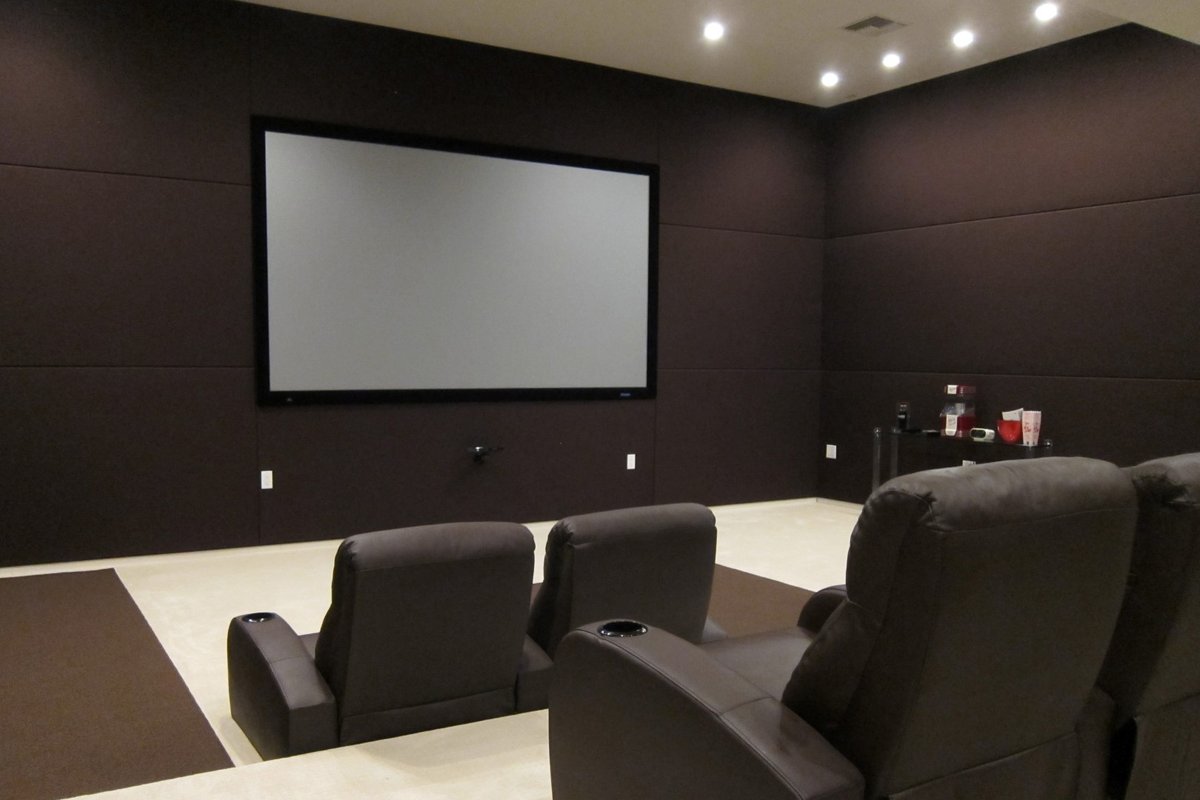
Imagine settling into your favorite chair, the lights dimming, and the opening credits rolling. The image on screen is stunning, but it’s the sound that truly immerses you – dialogue crisp, explosions visceral, and soundtracks soaring. This isn't just about expensive speakers; it's about the very space they inhabit. When it comes to transforming a room into an auditory paradise, Home Theater Room Design & Acoustics aren't just important; they are the bedrock of a truly cinematic experience. Without proper acoustic planning, even the most high-end equipment will underperform, delivering a muddled, fatiguing, or simply unconvincing soundstage.
Getting the sound right is an art and a science, ensuring every subtle whisper and thunderous rumble reaches your ears precisely as the director intended. This guide cuts through the noise, offering clear, actionable insights into designing a room that sounds as incredible as it looks.
At a Glance: Your Acoustic Cheat Sheet
- Acoustics First: Room acoustics are the single most important factor for superior sound quality, even more than high-end electronics.
- Echo vs. Isolation: Acoustic treatments prevent echoes within the room; sound isolation stops sound from escaping or entering. They are distinct challenges.
- Prioritize Purpose: A room designed for 7.1-channel home theater will not be ideal for 2-channel stereo music. Choose your primary focus.
- Absorption is Key (for HT): Home theaters need significant acoustic absorption (60-70% wall/ceiling coverage) to prevent sound channels from blurring.
- Right Materials Matter: Use specific rigid acoustic fiberglass panels (e.g., Owens Corning 703 or equivalents). Avoid common ineffective materials like regular fiberglass insulation or "acoustic" ceiling tiles.
- Treat the Front: The front wall and adjacent side walls (behind the front speakers) must be thoroughly deadened with absorption panels.
- Mind Reflections: Identify and treat primary reflection points on side walls and the ceiling to improve imaging.
- Bass Traps for Control: Install bass traps in corners to tame boomy, uneven bass frequencies.
- Tech & Multi-Subs: Leverage room equalization software and multiple subwoofers for a smoother bass response across all seating positions.
- Center Channel Clarity: Use rubber feet, angle the speaker, and adjust crossover frequencies if it's placed in a cabinet.
Why Your Room's Acoustics Are Everything
You’ve invested in a killer projector, a massive screen, and an array of sleek speakers. You turn on a movie, expecting audio nirvana, only to be met with booming bass, indistinct dialogue, and an overall sense that the sound is just…off. The culprit? More often than not, it's the room itself.
Think of your home theater room as a giant, complex musical instrument. Every wall, ceiling, floor, and piece of furniture acts as a reflector, absorber, or diffuser of sound. When sound waves bounce indiscriminately around a hard-surfaced room, they create echoes and reverberations that smear the audio, making it difficult for your ears and brain to distinguish individual sounds. This effect, often called "muddiness" or "channel muddling," is particularly detrimental in a multi-channel home theater setup where precise sound placement is paramount.
The primary goal of acoustic room treatments is to tame these unruly reflections, preventing echoes within the listening room. It's crucial to understand this distinction: acoustic treatments improve the sound inside the room. They are not designed to prevent sound from being heard outside the room, which is the domain of sound isolation design – a separate, often more intensive, endeavor we'll explore later.
Home Theater vs. Music Room: A Fundamental Difference
Before you even start hanging panels, you need to decide: is this primarily a home theater for movies and games, or a dedicated listening room for 2-channel stereo music? The answer dramatically shapes your acoustic approach.
- For Home Theater: You want a controlled, "dead" room where sound is absorbed, not reflected. The goal is pinpoint accuracy for each speaker channel, preventing crosstalk and ensuring dialogue is clear and sound effects are distinct. This requires substantial acoustic damping, often covering 60-70% of wall and ceiling surfaces with absorptive material. Some reflections are still desirable, however, to maintain a sense of spaciousness and dynamics; an overly dead room can sound claustrophobic.
- For 2-Channel Stereo Music: The ideal listening room is much livelier. Minimal damping is preferred, allowing natural echoes and reflections to contribute to the music's ambiance and "air." The room itself becomes part of the instrument, enhancing the musical experience rather than trying to disappear.
For the purpose of this guide, we'll focus heavily on the home theater approach, as it generally requires a more rigorous and extensive acoustic treatment plan.
The Right Tools for the Job: Acoustic Treatment Materials
This is where many DIY enthusiasts stumble. Not all "acoustic" materials are created equal, and using the wrong kind can be worse than using nothing at all.
The Gold Standard: Rigid Acoustic Fiberglass Panels
The bedrock of effective home theater acoustic treatment is specific acoustic fiberglass panels. We're talking about products like Owens Corning 703, or equivalent rigid acoustic fiberglass panels from reputable manufacturers such as Knauf, Armstrong, Delta, Johns-Manville, CertainTeed, Roxul, Ottawa Fibre, or Fibrex.
These panels are typically:
- Size: 2x4 feet or 2x2 feet.
- Thickness: Around 3/4-inch to 2 inches (though thicker options are available for bass absorption).
- Density: This is critical. They are significantly more compressed and denser than standard fiberglass insulation but less dense and rigid than most ceiling tiles. This specific density allows them to effectively absorb a broad range of mid-to-high frequencies, which are the primary culprits for echoes and muddiness in a home theater.
Materials to AVOID (and Why)
Don't fall for these common misconceptions:
- "Acoustic" Ceiling Tiles: While they might have a texture that looks like acoustic material, most ceiling tiles are designed for architectural aesthetics and some measure of sound isolation between rooms, not for in-room echo reduction. They are too rigid and dense to effectively absorb sound within the listening space. They perform more like a thin layer of drywall.
- Fiberglass Wall Insulation: This is designed for thermal insulation, not acoustic performance. It's not dense enough for effective in-room absorption; mid and lower frequencies will largely pass right through it, providing minimal benefit for echo control. It's great for filling wall cavities for sound isolation, but not for surface treatment.
Strategic Placement: Where to Put Your Panels
Placement isn't random; it's a science tailored to your room and speaker setup.
The Critical Front Wall: An Acoustically "Dead" Zone
The front of your home theater room – the wall behind your screen and front speakers (Left, Center, Right) – is arguably the most important area to treat. To achieve superior sound, this area must be completely acoustically dead.
Your mission: Install two layers of rigid acoustic fiberglass panels covering the entire front wall of the room. Extend this coverage to the front 3 feet of the side walls, precisely where your front speakers are positioned. This comprehensive treatment properly isolates the critical front three channels, ensuring their sound is direct and unimpeded by reflections off the wall behind them. This is often where the biggest improvement in sound quality can be found, even surpassing the benefits of receiver room correction software.
The Power of the Air Gap
For maximum performance, don't just flush-mount your acoustic panels directly against the wall. Instead, create a small air gap – typically 1/2-inch to 1-inch – behind each panel. This allows sound waves to pass through the panel, reflect off the wall, and then be re-absorbed as they pass back through the panel. This simple technique significantly enhances the panel's broadband absorption capabilities, especially at lower frequencies.
Taming Reflections: Primary Reflection Points
After the front wall, the next critical areas are the primary reflection points. These are the spots on your side walls and ceiling where sound from your main front speakers (Left, Center, Right) bounces directly towards your primary listening position. Untreated, these reflections arrive at your ears slightly delayed after the direct sound, blurring the soundstage and making it difficult to pinpoint sound sources.
How to find them:
- Position: Place your speakers and sit in your primary listening position.
- The Mirror Trick: Have a friend move a mirror along the side wall between your speaker and your listening position. When you can see the speaker's reflection in the mirror from your listening spot, you've found a primary reflection point.
- Repeat: Do this for each of your front three speakers (Left, Center, Right) on both side walls. Ideally, repeat the process for the ceiling as well.
- Place Panels: Install absorptive panels directly at these identified points. This will dramatically improve the imaging and clarity of your front soundstage.
Achieving Full Coverage: Additional Panels
Once the front wall and primary reflection points are treated, you'll need more panels to reach the recommended 60-70% wall and ceiling coverage. This isn't just an arbitrary number; it's about achieving enough damping to prevent channel muddling while still allowing for some natural dynamics.
- Distribution: Distribute additional panels evenly throughout the room. Their exact placement can be based on aesthetics once the critical points are covered.
- Basic Target: For a simpler setup, aim to cover at least 35-40% of the total surface area of your two side walls with absorptive panels. This is a good starting point to significantly reduce lateral reflections.
Surround Speakers: A Different Approach
Unlike the front soundstage, where direct sound is paramount, reflection and dispersion are often desirable for surround speakers. This creates a more enveloping, diffuse sound field, enhancing the "ambiance" effects of surround channels without drawing attention to the specific location of the surround speakers. This is why bi-polar or di-polar surround speaker designs are often recommended, as they intentionally radiate sound in multiple directions.
Deep Bass Control: The Essential Role of Bass Traps
Bass frequencies are notoriously difficult to control in any room. They have long wavelengths, which means they can build up unevenly, especially in corners. This leads to "boomy" bass – certain notes are overemphasized, while others disappear, resulting in an uneven and fatiguing low-end response.
Enter Bass Traps: These are essentially extra-thick acoustic panels specifically designed to absorb lower frequencies. They are made from the same rigid fiberglass material, but their increased thickness (often 4 inches or more) and corner placement allow them to tackle problematic bass modes.
- Placement: Install large bass traps in all corners of the room – wall-to-wall corners, wall-to-ceiling corners, and even wall-to-floor corners if practical. The more corners you treat, the more effective your bass control will be.
- Use with Discretion: While bass traps are vital for taming modes, excessive use can sometimes reduce the overall "impact" or "punch" of your bass. It's a balance. Start with the main corners and evaluate.
Room Geometry: Friend or Foe?
The physical dimensions and shape of your room have a profound impact on its acoustic behavior, particularly for bass frequencies.
- Room Size: Larger rooms often require more powerful amplifiers and speakers to fill the space with dynamic sound. However, they also offer more flexibility in speaker placement and can generally achieve a more expansive soundstage.
- Ideal Shape: The Golden Ratio: Rectangular rooms are generally best, but not all rectangles are equal. The Golden Ratio (approximately 1:1.6:2.6 for height:width:length) is often cited as an ideal starting point. Rooms proportioned this way tend to have more evenly distributed bass modes, reducing the likelihood of severe peaks and dips at specific frequencies.
- The Problem with Parallel Walls: Parallel walls are the enemy of flat frequency response. They create "standing waves" where certain bass frequencies are amplified at specific points in the room and canceled out at others. While often impractical, ideally, no two walls would be perfectly parallel.
- Corners and Bass: As mentioned, corners are notorious for amplifying specific bass frequencies. This is why bass traps are so crucial. Interestingly, irregular room shapes or rooms with many openings can sometimes help distribute lower frequencies more evenly by disrupting parallel wall reflections, though they can also present new challenges.
Leveraging Technology: Room Correction & Multiple Subwoofers
Even with excellent passive acoustic treatments, technology can provide a significant boost, especially in managing the notoriously difficult bass region.
Room Equalization/Correction Software
Many modern subwoofers and home theater receivers come equipped with sophisticated, microphone-based room correction systems (e.g., Audyssey, Dirac Live, Anthem ARC, YPAO). These systems:
- Analyze: Play test tones through your speakers and subwoofers.
- Measure: Use a calibrated microphone to measure the room's acoustic response at your listening positions.
- Correct: Identify problematic frequency peaks and dips (especially in the bass) and apply equalization to flatten the response.
This technology can effectively reduce bass peaks and fill in some dips, providing a more even bass response across the primary listening area. It's a powerful tool, but it's important to note that it's a corrective measure; it can't fix fundamental acoustic problems as effectively as physical treatments. Think of it as fine-tuning after you've built a solid foundation.
The Unbeatable Advantage of Multiple Subwoofers
If there's one "hack" to dramatically improve bass performance, it's this: use multiple subwoofers. While one subwoofer is good, two are significantly better, and four can be transformative.
- Minimizing Modes: Multiple subwoofers, strategically placed throughout the room, excite room modes in different ways. This causes them to cancel each other out, leading to significantly fewer bass peaks and dips.
- Even Bass Across Seats: The result is a much more even and consistent bass response across all seating positions. No more "bass sweet spot" where only one person enjoys the rumble.
Most enthusiasts find that even two well-placed subwoofers make a dramatic difference, providing a smoother, more articulate, and impactful low-frequency foundation for their home theater. If you're looking to explore the full spectrum of home theater options, remember to think about choosing the right home theater equipment for maximum impact.
Center Channel Clarity: Navigating Cabinet Placement
The center channel speaker is arguably the most crucial speaker in a home theater, carrying 70-80% of dialogue. Its placement and optimization are vital for clear, intelligible speech.
The Ideal Scenario
Ideally, your center channel speaker would sit on a dedicated stand, positioned just below or behind your acoustically transparent screen, completely isolated from other surfaces. This allows it to breathe and perform without interference.
Cabinet Placement Tricks (When You Have No Choice)
However, many home theaters, especially those in living rooms, require the center channel to be placed in a cabinet or entertainment unit. If this is your reality, here are some tricks to minimize its negative impact:
- Isolate with Rubber Feet: Place stick-on rubber feet (or specialized isolation pads) on the bottom of the speaker. This decouples the speaker from the wooden shelf, reducing resonance and vibrations that can muddy the sound.
- Angle for Ear Level: If the speaker is placed low in a cabinet, stack extra feet or use a small wedge under the front of the speaker. This tips it slightly upwards, aiming the sound directly towards your ears at the primary listening position.
- Adjust Crossover Frequency: This is a powerful, often overlooked, solution. In your receiver's menu, navigate to the speaker setup and adjust the crossover frequency for the center channel.
- The Problem: When a center channel in a cabinet tries to reproduce deep bass (e.g., below 80Hz), the cabinet itself often resonates, causing muffled dialogue and boomy sound.
- The Fix: Increase the crossover frequency from the default 80Hz to 90Hz, 100Hz, or even up to 120Hz. This shifts the deeper bass frequencies away from the center channel and to your dedicated subwoofer(s), where they belong. The result is significantly clearer, more articulate dialogue. Do not exceed 120Hz, as going too high can create a noticeable gap in frequencies.
Mastering these tweaks will ensure your dialogue is always front and center, never lost in the action. And for even more detail on fine-tuning your sound, consider learning about calibrating your subwoofers for peak performance.
Beyond Echoes: Sound Isolation Room Design
While acoustic treatments manage sound within your room, sound isolation prevents sound from entering or leaving the room. This is crucial if you have neighbors, family members, or other rooms where loud movie watching would be a disturbance. Sound isolation is a significantly more complex and expensive undertaking, requiring a different set of principles.
The core parameters for effective sound isolation are: mass, rigidity, and vibration control of walls, floors, and ceilings.
Walls: Building a Sonic Barrier
- Mass is Key: The heavier and more rigid your walls, the better they will block sound.
- Double Drywall Layers: Install two layers of drywall on each side of the wall.
- Different Thicknesses: Ideally, use different thicknesses (e.g., a 3/4-inch layer screwed to the studs, followed by a 1/2-inch or 5/8-inch layer glued to the first). Different thicknesses block a broader range of frequencies.
- Green Glue: Use an acoustic damping compound like Green Glue between the drywall layers for further vibration reduction.
- Vibration Control: Resilient Channels/Clips: Instead of screwing drywall directly to studs, use special drywall mounts (resilient channels or isolation clips with rubber dampers). These create a tiny air gap and decouple the drywall from the studs, significantly reducing vibration transfer.
- Double-Stud Walls: The ultimate wall isolation technique involves constructing two entirely separate, non-touching stud walls. There’s an inner wall for the home theater room and an outer wall, with a small air gap (often filled with insulation) in between. Because the walls don't touch, vibration transfer is virtually eliminated.
- Rubber Curtains: For extreme sound isolation, expensive, heavy rubber curtains can be hung between the stud walls. These offer superior sound absorption and blocking compared to standard fiberglass insulation.
Ceilings: Isolating the Sound Above
Ceilings require similar physical isolation techniques as walls.
- Decoupling: The ceiling structure of your home theater should be physically isolated from the floor joists of the room above. This can involve resilient channels, independent ceiling joists, or a "room within a room" construction.
- Mass: Add layers of drywall and acoustic damping compound to the ceiling as well.
Concrete: The Ultimate Sound Blocker
If you have the luxury of building from scratch, concrete is your best friend for sound isolation. Concrete walls, floors, and ceilings provide immense mass and rigidity, making them incredibly effective at blocking sound transfer.
Air Ducts: A Hidden Weak Point
Air ducts are notorious for transmitting sound, acting as direct highways for noise between rooms.
- Flexible Ducts: Use flexible, insulated air ducts (often fiberglass-covered) for both supply and return air.
- Length and Bends: Incorporate extra length and multiple bends in the ductwork. Sound waves lose energy as they travel through turns and absorbent material, reducing the amount of noise that gets through.
- Mufflers: Consider installing acoustic duct mufflers if high levels of isolation are required.
Remember, sound isolation is often best considered during the initial construction or a major renovation, as it involves significant structural changes. It’s a completely different challenge from DIY acoustic panel construction for in-room sound control.
Putting It All Together: Your Path to Sonic Perfection
Designing your home theater room's acoustics is a journey that, when done right, profoundly elevates your entertainment experience. While basic improvements can be made with simple, targeted treatments, achieving truly perfect acoustics is a nuanced science. It’s also just one crucial piece of a larger design puzzle, alongside considerations like creating the perfect ambiance with lighting and seating, sight lines, screen size, equipment selection, meticulous installation, and final calibration.
For advanced designs, or if you're seeking a no-compromise solution, professional acoustic design services are highly recommended. Companies like Vicoustic, Kinetics, and Cinematech specialize in creating bespoke acoustic environments, ensuring every square inch of your room contributes to an unparalleled auditory experience. They can help navigate complex room geometries and integrate treatments seamlessly into your aesthetic.
Ultimately, your goal is to make the room disappear, leaving you utterly immersed in the soundscape of your chosen content. By focusing on smart Home Theater Room Design & Acoustics, you're not just building a room; you're crafting an experience that will captivate and thrill for years to come. To explore more about refining your viewing sanctuary, be sure to Explore Film Home 2.